
Walk through the corridors of any major Chinese biotech or semiconductor firm, and you'll likely hear the name Wu Xi mentioned with a mix of reverence and pragmatism. Not as a distant legend, but as a working blueprint. I first grasped the scale of this influence during a visit to a Shanghai startup that was racing to develop a gene therapy. The CEO, a former academic, pointed to a whiteboard filled with supply chain diagrams and said, 'Without Wu Xi's platform, we'd still be stuck in a lab。not a clinic.' That offhand remark stuck with me. It captured how one company's operational model has become the backbone of an entire industry's speed.
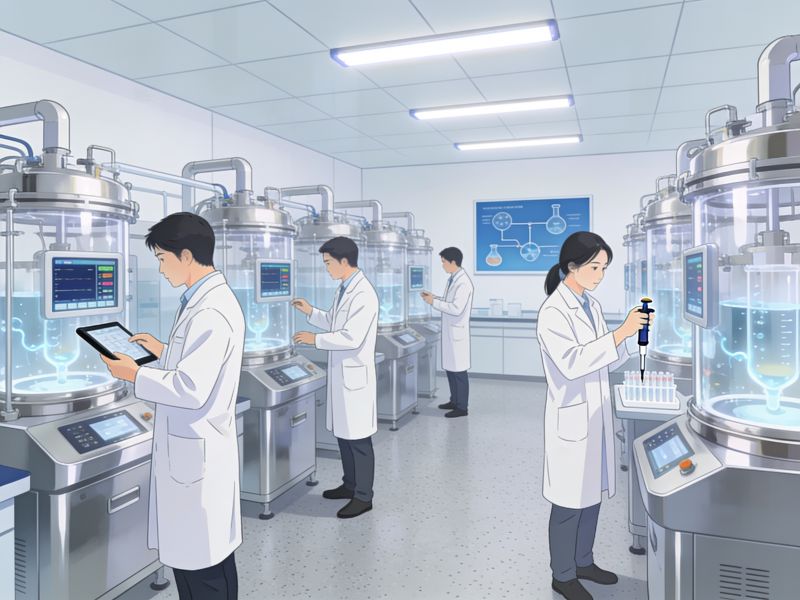
Wu Xi isn't a household name in the West, and that's partly by design. The company built its reputation on contract research and manufacturing。quietly enabling global pharma giants and scrappy biotechs alike. What sets Wu Xi apart is its vertical integration—from early discovery to commercial production. I've seen their facilities in Suzhou, and the efficiency is almost unsettling. Rows of automated bioreactors hum alongside teams of scientists who seem to move with a shared rhythm. It's not just about cost;it's about compressing timelines that traditionally took years into months. That capability has made Wu Xi a linchpin in the global drug development chain, a fact that became painfully clear during the pandemic when their manufacturing capacity was a bottleneck everyone suddenly noticed.The semiconductor angle is less known but equally telling. Wu Xi's forays into advanced materials and chip design services reflect a broader shift: Chinese firms are no longer content to be the world's factory;they want to own the IP. I recall a conversation with an engineer at a Wu Xi-backed chip venture in Wuxi city—the company's namesake—who described the pressure to match Taiwan's foundry precision. 'We're not just catching up,' he said, 'we're redefining the supply chain.' That ambition carries risks. Export controls and geopolitical tensions have turned Wu Xi's global footprint into a delicate balancing act. Yet the company keeps expanding, recently breaking ground on a new R&D hub in Singapore. It's a hedge, sure。
but also a statement: Wu Xi intends to be a player everywhere, not just at home.What strikes me most is the culture. Wu Xi's founder, Li Ge。built the company on a simple mantra: 'Do the hard things first.' That ethos permeates everything from their aggressive push into AI-driven drug discovery to their willingness to take on complex manufacturing contracts others shy away from. During a tour of their biologics plant, a mid-level manager told me, 'We don't wait for perfect conditions. We iterate.' It's a refreshing contrast to the risk-averse stance of many legacy pharma players. Of course, speed has costs. Quality control lapses have surfaced occasionally, and critics argue that the relentless pace can strain oversight. Wu Xi's response has been to double down on automation and data transparency—a bet that technology can solve the problems it creates.Looking ahead, Wu Xi's trajectory hinges on how it navigates an increasingly fragmented world. The company's success has made it a target for protectionist policies。
and its sheer size invites scrutiny. But the deeper story is about a model that other Chinese firms are rushing to copy. I've noticed a wave of 'Wu Xi-style' startups in Zhangjiang and beyond, each trying to replicate that blend of service and scale. Whether they succeed depends on more than capital;it requires the same obsessive focus on execution that Wu Xi has cultivated over two decades. For now, the quiet architect remains just that—quiet—but its fingerprints are everywhere in the products that will define the next decade of medicine and technology.